
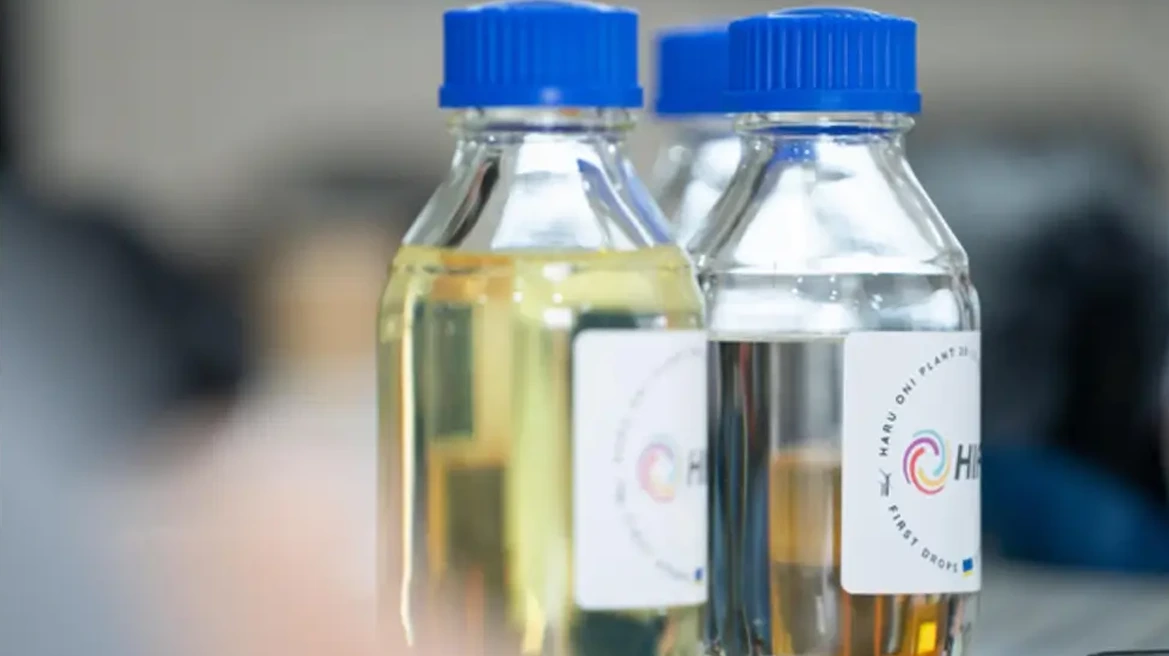
e-Fuels are chemically equivalent to traditional gasoline, methanol, or jet fuel, meaning they deliver the same energy output as conventional fuel sources. e-Fuels are created from air and water and do not contain impurities, such as sulfur and other polluting particulates. Unlike fossil fuels, the energy-creating carbon in e-Fuels comes from recycled carbon dioxide that is already in our atmosphere, so the carbon intensity of e-Fuels is very low to zero.
e-Fuels are competitive with conventional fossil fuels in markets that have carbon pricing structures. Large-scale e-Fuel production facilities – located in areas with the world’s best renewable energy resources – can produce e-Fuels at competitive prices. Increased production capacity and increased equipment efficiency as e-Fuels are produced at scale are expected to reduce costs even further.
HIF Global is already producing e-Fuels at its facility HIF Haru Oni, in southern Chile. The timeline for mass production depends on scaling up infrastructure, securing investments, and ensuring access to abundant renewable energy sources. Current projections estimate that mass production of e-Fuels will begin by 2029. As production ramps up, costs are expected to decrease, making e-Fuels a more accessible and widespread solution for decarbonizing transportation and industries worldwide.
HIF’s e-Gasoline has been used in several events from race cars at the Porsche Mobil1 Supercup 2024 and 2025 seasons, to Zodiac boats in Antarctica, showcasing that e-Fuels are a feasible alternative to fossil fuels, tackling climate change and without changing engines and infrastructure.